
IoT for Housing Associations
Sensors in homes, what they genuinely detect, and how damp, mould and heating data reaches the people who can act on it.
The saving is not the electrician's time; it is the reporting loop that never had to happen.
Housing came late to connected devices
Smart technology arrived in other sectors years before it arrived in housing. In 2015 HACT's chief executive described the Internet of Things as "notable by its absence in social housing" — and for a good while after that, the picture did not change much.
It has changed now. Global IoT spending passed the trillion-dollar mark, there are more than 10 billion active devices worldwide, and around 83% of organisations report improved efficiency after adopting connected technology. The question for housing providers is no longer whether the technology works. It is what to point it at.
If it lands in a separate portal someone has to remember to check, it becomes noise.

What a sensor actually does for a landlord
The useful examples are small and operational rather than futuristic.
A stairwell light fails. The sensor reports it, a job is raised, the part is taken from stock and the work lands in an electrician's calendar — without a resident having to notice, report it and wait. The saving is not the electrician's time; it is the reporting loop that never had to happen.
Scale that across communal plant, heating, lifts and door entry and the effect is a shift from reactive to informed maintenance: you are responding to condition rather than to complaints.
Where it matters most: damp, mould and cold homes
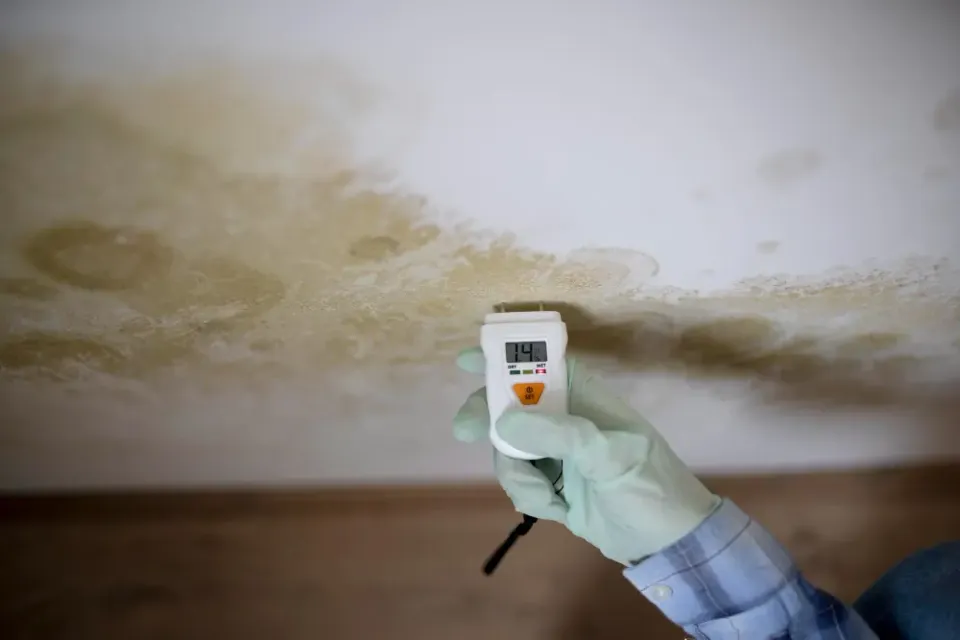
The application with the clearest regulatory weight is environmental monitoring. Humidity and temperature sensors give a provider evidence about conditions inside a home over time, rather than a judgement made on a single visit.
That matters for two reasons. It identifies homes at risk before a resident reports anything, which is the only way to get ahead of Awaab's Law timescales. And it produces a record — a defensible account of what conditions were and what was done about them.

The independent living case
For residents, the same technology does something different. Remote control of heating, doors, curtains and appliances supports independent living for people who would otherwise struggle with them, and gives residents on tight budgets visibility of what their energy is actually costing.
This is where IoT stops being an efficiency programme and starts being a service one — which is also why it needs to be designed with residents rather than deployed at them.
Planning a rollout that survives contact with reality
The pattern that fails is a pilot on one scheme, with its own dashboard, that never connects to anything. Sensors generate a great deal of data and very little value on their own.
What makes the difference is where the readings land. If a humidity alert raises a case in the same system that holds the property, the tenancy and the repairs history, it becomes work. If it lands in a separate portal someone has to remember to check, it becomes noise.
Start with a problem you already have — damp risk, void turnaround, communal plant failures — and connect the data to the process that already exists to deal with it.
Get the full guide
Tell us who you are and the guide opens straight away, all 10 pages, to read online or download as a PDF.
Download the guide
What housing providers say
Named people at named organisations, in their own published words.
“We realised that we had a gap around the golden thread of data, in terms of the availability and accessibility of the data we held in seventeen different systems… That meant colleagues could immediately see all non-compliant properties.”

Jake Le Page Head of Building Safety Regulations Notting Hill Genesis
“Neo brought strong Dynamics 365 expertise, worked collaboratively with our internal teams and applied Microsoft best practice within a live operational environment… We would be pleased to recommend them as a Microsoft Dynamics 365 partner within the housing sector.”

Wayne Human Head of IT Change Sage Homes
“The successful deployment of this solution has significantly increased transparency and improved the operational efficiency of our contact centre, allowing us to deliver greater value to our customers.”
Philip Wragg Infrastructure Programme Manager
“The Neo Technology model allows us to scale our development capacity, accelerating our transformation programmes while future-proofing our business, while achieving substantial industry cost savings.”
Group CIO Notting Hill Genesis
Related proof
See how this works in practice
Thirty minutes, walked through by the people who deliver it. Bring your questions.